The Dry-Run Lake: What Big Bass Bonanza Demo Mode Teaches — and What It Quietly Skips
Photo: Albarubescens, CC BY-SA 4.0, via Wikimedia Commons
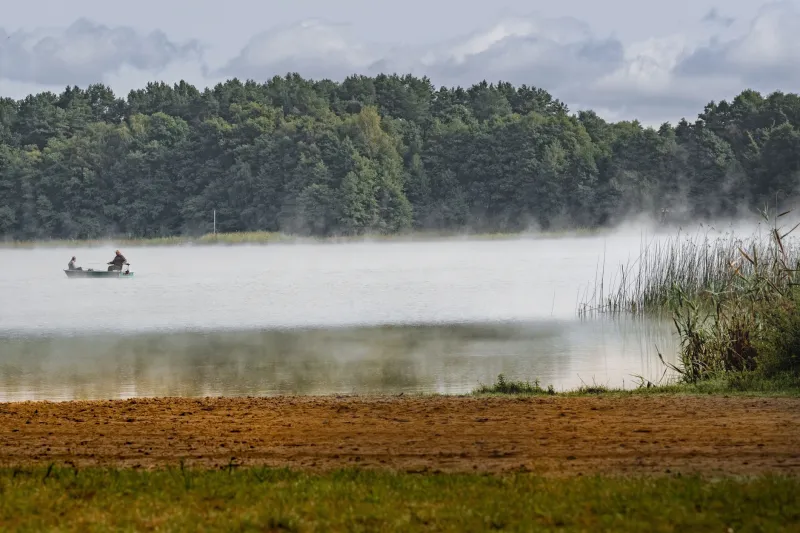
Demo mode is the borrowed boat of online slots. A friend hands you the keys, you putter around the lake, and you learn where the throttle is. What you do not learn is how you handle a storm, an empty gas gauge, or the moment the dock is drifting out of sight. Big Bass Bonanza practice spins work the same way: excellent for the controls, useless as a weather forecast.
That distinction matters more than ever in 2026, when nearly every US-facing casino lobby puts a free-play version a click away. The feature is genuinely useful. It is also easy to misread. A demo session can make a streaky game feel predictable, a tight bankroll feel infinite, and a lucky run feel like a skill. The trick is knowing which lessons transfer to real-money play and which ones stay on the practice pond.
What Demo Mode Actually Shows You
Practice spins are a lab for the game's machinery. Big Bass Bonanza has a specific rhythm — long quiet stretches, money fish that sit on the reels, and a fisherman wild that scoops up every cash value in sight during the free spins round. In demo mode you can watch that collection happen without flinching. You can see how the 2x and 10x multipliers stack across retriggers, how many scatters it takes to restart the bonus, and where the max win cap sits.
That is real information. If you have never played the game, 200 or 300 demo spins will teach you more than a dozen paytable screenshots. You will see that the base game is mostly a waiting room. You will see that the bonus is where the money fish and the fisherman wild do their work. You will see that a 10x multiplier does not automatically mean a giant payout if the fish on screen are small.
Demo mode also gives you a feel for volatility. Not a precise measurement, mind you. A few hundred spins is a sample, not a verdict. But you can absolutely learn that Big Bass Bonanza is a high-variance slot that can go cold for long stretches. That is useful. It is the difference between expecting a bonus every 40 spins and understanding that the dry spells are part of the design.
The Part Demo Mode Can't Replicate
Here is where the borrowed boat springs a leak. Demo credits are not real money. That sounds obvious, but the gap between fake and real is where most players get fooled.
First, there is pressure. In demo mode, a $1 spin is a click. In real play, a $1 spin is a dollar. String together 100 of them and you have spent a nice dinner. String together 300 and you have spent a weekend of gas money. Demo mode cannot teach you how you will feel when the balance drops and the bonus has not landed. It cannot teach you whether you will chase, quit, or stick to the plan. That is the most important lesson in slot play, and it only arrives with real skin in the game.
Second, demo mode is loose with pacing. Most free-play versions let you reset the balance or simply hand you a fresh stack of credits. Real bankrolls do not refresh. If you practice with a $1,000 demo balance and a $1 bet, you are not learning how a $100 bankroll survives a $1 spin. You are learning how a fantasy bankroll survives a fantasy session. Set a realistic practice bankroll and stick to it if you want the exercise to mean anything.
Third, the settings may not match. Demo mode usually reflects the developer's default configuration. The live casino lobby is where the actual paytable, bet limits, and account rules live. Big Bass Bonanza is published with a 96.71% RTP in its standard form, but operators can run different configurations in some markets, and US-facing sites have their own rules about autoplay, session limits, and bonus eligibility. Before you deposit, open the live game's paytable and compare it to the demo you practiced on. Do not assume they are twins just because the fisherman looks the same.
A Practical Demo Checklist
Use free play like a flight simulator, not a fortune teller. Here is a simple routine that keeps the exercise honest.
- Decide on a practice bankroll that matches your real budget. If you would never deposit more than $100, do not practice with $10,000.
- Pick a bet size you would actually use. A $1 spin on a $100 bankroll is a 100-unit session. That is a real plan.
- Log at least 500 spins, ideally 1,000. Write down bonus triggers, dead-spin streaks, and your biggest single win. You are looking for a feel, not a guarantee.
- Watch the bonus round closely. Count how many fisherman wilds appear, how often money fish show up, and how the multiplier changes on a retrigger.
- Test the session length. Play for 20 minutes, then stop. Notice whether you were chasing the bonus or enjoying the ride.
- Compare demo and live paytables before you spend a cent. Check the RTP, bet range, and any jurisdiction-specific rules.
- Never treat a hot demo session as a prediction. The next spin does not know what the last one did.
How to Read the Results Without Fooling Yourself
The biggest mistake is treating demo mode as a preview of what will happen next. It is not. It is a preview of how the game works. A demo session that produces three bonuses in 200 spins does not mean the live game is due. A demo session that produces none does not mean the game is broken. Random number generators do not carry grudges or favors.
The second mistake is assuming demo mode is rigged to tease you. Most free-play versions use the same core game logic as the real thing, though the configuration can differ. The more realistic read is simpler: demo mode is a sandbox. It is built to let you try before you buy. It is not built to simulate the emotional weight of a real bankroll.
The third mistake is ignoring the max win. Big Bass Bonanza's top prize is a tail event — a very rare outcome that demo mode is unlikely to show you even if you play for hours. If you are practicing for the thrill of a 2,100x hit, you are practicing for a lightning strike. Use demo mode to learn the mechanics, not to rehearse the jackpot.
The Bottom Line
Demo mode is a free boat ride, and that is exactly how you should treat it. It is a great place to learn the throttle, the tackle, and the tides of Big Bass Bonanza. It is a bad place to learn how you will behave when the lake is real and the gas gauge is yours. Use it to understand the game. Then use a real bankroll plan to understand yourself. That is the only practice that pays off.