The Fast-Forward Fallacy: Why Turbo Spin Makes Big Bass Bonanza Feel Cheaper Than It Is
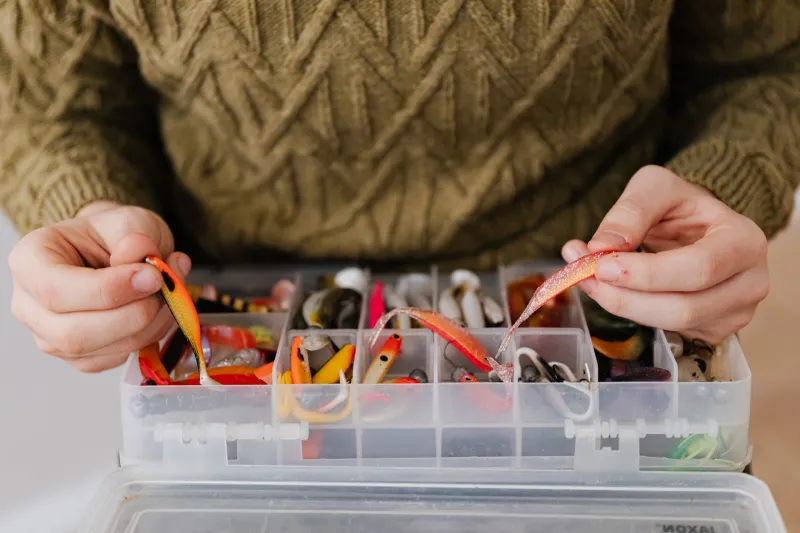
Turbo spin looks like a convenience button. One tap, and Big Bass Bonanza stops making you wait through the reel animation. The fish still swim, the line still pays, and the bonus still triggers when it triggers. Nothing about the underlying odds changes. So why does the game feel different when the reels are flying?
Because the reel speed is not really the issue. The issue is what speed does to your session. Turbo compresses the gap between wagers, shortens the pause where you might reconsider your stake, and turns a relaxed fishing trip into a conveyor belt of near-misses. For US players who like a casual session, that is worth understanding before the next cast.
Turbo Doesn't Change the Lake — It Changes the Casting Rate
Big Bass Bonanza's turbo and quick-spin settings do not make a bonus more likely per spin. They change how many spins you can fit into a given amount of time. That sounds obvious, but the practical effect is easy to underestimate.
Suppose a normal spin takes about three seconds including the animation and your own tap. That is roughly 1,200 spins per hour if you never pause. A turbo setting that cuts the cycle to one second can push that toward 3,600 spins per hour. Same game, same RTP, same volatility — but three times the wagering exposure in the same sixty minutes.
At a $1 stake, that is the difference between putting $1,200 and $3,600 through the reels in an hour. Using the game's long-term theoretical return as a rough planning number, the expected cost per hour scales with that exposure. The point is not that every session will land exactly on the expected value. The point is that turbo does not give you more time to enjoy the lake. It gives the lake more chances to take a bite out of your bankroll.
The Bankroll Math: More Spins per Hour, More Exposure per Hour
Slot math is usually discussed in terms of RTP and volatility, but session math is about exposure. Your hourly risk is a product of stake size, spin speed, and how long you actually play.
A player spinning at $1 with a three-second cycle is wagering about $1,200 per hour. A player spinning at $1 with a one-second turbo cycle is wagering about $3,600 per hour. If both players bring a $100 bankroll, the turbo player is asking that bankroll to survive three times as many wagers. The turbo player is not necessarily unlucky. They are simply playing a much faster game with the same budget.
This is why turbo can feel cheaper than it is. A single spin still costs a dollar. The loss does not arrive as one big bill. It arrives as a rapid series of small ones, and the speed makes the total harder to track. By the time you check your balance, you may have cycled through more wagers than you intended.
Why Speed Makes Near-Misses Stickier
Big Bass Bonanza is built around anticipation. Two scatters on the reels and one empty space can feel like the bonus was almost yours. In normal speed, you have a moment to register that feeling, smile, and move on. In turbo, the next spin is already gone before the near-miss has finished landing.
That is not just a cosmetic difference. Fast reels create a denser stream of almost-events. More spins per minute means more two-scatter teases, more fisherman symbols that stop one reel short, and more moments that pull your attention back to the screen. The game starts to feel like it is constantly about to do something. In reality, it is just doing the same thing more often.
Speed also makes it easier to chase. When a bonus finally hits after a quick run of dead spins, the relief can arrive before you have really processed the cost. Turbo turns the session into a blur of small emotional spikes. That is a bad environment for clear decisions.
The Decision Window Shrinks
Every spin is a tiny decision: keep the stake, change the stake, take a break, or stop. Turbo shrinks the space between those decisions to almost nothing. If you are playing on autopilot, the button does the deciding for you.
This matters most around stake size and session length. A player on normal spin speed has a few seconds to notice that their balance is dropping faster than expected. A turbo player may not notice until the bankroll is already deep in the red. The faster the game, the more discipline has to come from outside the screen — a timer, a loss limit, or a hard stop written down before the session begins.
A Slow-Spin Field Test You Can Run This Weekend
If you want to know what turbo is doing to your play, run a simple comparison. Pick two sessions of the same length, ideally twenty minutes each, and play the same stake. Use turbo for one session and normal speed for the other. Do not try to win. Try to observe.
During each session, note three things: how many spins you completed, how many times you felt the urge to raise your stake, and how often you checked the clock. Most players find that turbo produces a much higher spin count and a stronger urge to chase. That is the trap in plain sight.
For a slower, more controlled version, set a twenty-minute timer and play only normal speed. Count your spins out loud or jot them down. Take a ten-second pause every twenty-five spins. The pause feels awkward at first. That awkwardness is the decision window reopening.
What to Do With the Results
If turbo leaves you feeling rushed, spendy, or disconnected from your bankroll, you do not have to swear it off forever. You can treat it like a power tool: useful in short bursts, risky as a default. Many players are better served by normal speed, a fixed stake, and a session timer. The fish do not bite faster because the reels are spinning faster. The odds are the same either way.
The real choice is not turbo versus normal. It is whether you want to play a game you can feel, or a game that runs past you. Big Bass Bonanza is more fun when you are actually fishing. Slow down, watch the water, and let the turbo button stay dry.