Split the Tackle Box: What Happened When Two Players Shared One Big Bass Bonanza Bankroll

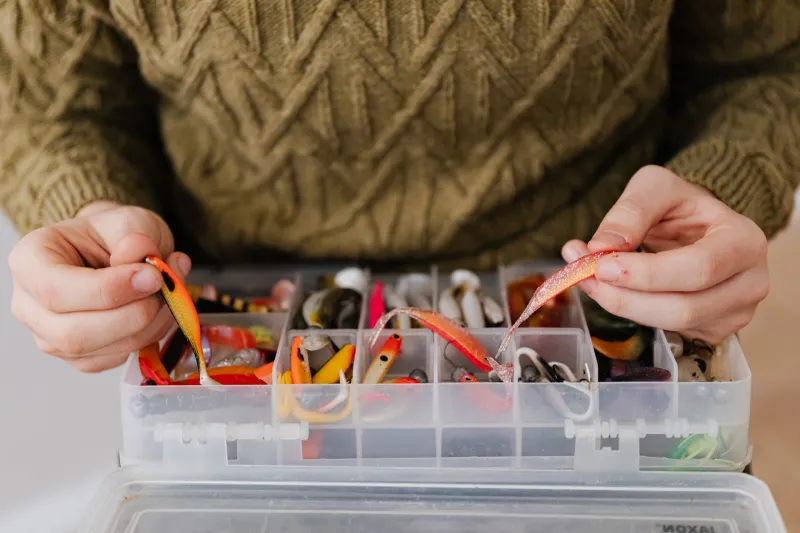
Photo: Ahmedsalahemam, CC BY-SA 4.0, via Wikimedia Commons
It started, as most questionable ideas do, over a plate of wings on a Friday night. My cousin Doug had just cashed out a modest sports-betting win and wanted to try Big Bass Bonanza, the fishing slot half his coworkers won't shut up about. I'd already logged a few hundred hours on it. So we tried something neither of us had done: we each dropped $150 into one shared account, agreed to alternate spins, and made every real decision together.
Two evenings, roughly 500 spins, one bankroll. The question we wanted answered was simple. Does splitting the wheel make two people more disciplined, or does it just hand you a second person to blame when the bass go quiet? Here's the honest field report.
The Setup: One Thumb on the Button at a Time
We kept it deliberately boring. Same account, same game, same bet level to start. Doug spun the first 25, I spun the next 25, and we swapped back and forth from there. The person not spinning had veto power over anything expensive. That's the whole structure, and it's the reason the experiment was worth running at all: neither of us could quietly tilt off the bankroll at 1 a.m. while the other one was in the kitchen.
We also agreed that money coming out was split 50/50 no matter who hit the bonus. That last part matters more than it sounds, and we'll get to why.
Rule One: Settle the Bet Size Before Anyone Touches the Button
Our first argument came within 90 seconds. Doug wanted to open at $1 per spin to 'give the bonus a real chance.' I wanted $0.50 because $300 across two players is a short leash, and Big Bass Bonanza is a high-volatility slot. Dead spins don't care about your enthusiasm.
We compromised at $0.50 and wrote the number down. That piece of paper turned out to be the single most useful object in the room. Once the stake was fixed, neither of us could nudge it up after a cold streak — which is exactly the moment a solo player talks themselves into doubling down.
If you take one thing from this experiment: pick the spin size while you're calm, ideally before you've spun anything, and treat it like a lease. Renegotiating mid-session is how one bankroll becomes zero bankrolls.
Alternating Sounds Fair Until About Spin 140
The first hour was genuinely fun. Every scatter felt like a shared win, and the trash talk was polite. Then spin 140 rolled around with the free spins still unsummoned, and a weird dynamic crept in: whoever was holding the mouse felt personally responsible for the drought.
Doug started apologizing for dead spins. I started narrating my turns like a guy trying to explain a bad round of golf. That's the hidden cost of co-play — a solo dry spell is just bad luck, but a shared one starts to feel like a performance review.
The fix was dumb and effective. We stopped treating each turn as a personal at-bat and started calling the whole thing 'our session.' Sounds soft. It worked. Twenty spins is twenty spins, no matter whose finger is on the button.
Bonus Buys Are Where Friendships Go to Die
This is the pressure point. A bonus buy costs 100x your stake, so at $0.50 it's $50 — a sixth of the whole bankroll in one click. We only allowed a buy with unanimous consent, and I'm glad we did, because we came close exactly twice and both times one of us said no.
That veto saved us somewhere around $100, and the honest truth is that neither of us had a real reason to buy beyond impatience. That's the pattern. Bonus buys feel like a decision but they're usually a mood.
If you and a friend do this, make the buy rule strict and make it symmetric. Nobody gets to override the other. The moment one person can spend the shared pot on a whim, the whole thing collapses into a very expensive group chat.
The Blame Ledger (and Why We Burned It)
Around the 90-minute mark I caught myself keeping score. Doug had spun through the longest dry patch, but I'd been at the wheel when the only decent hit landed. I genuinely started building a mental spreadsheet of who'd contributed what.
That's poison, and it's the thing every shared session has to strangle in the crib. If you're splitting results 50/50, you split the droughts too. Full stop. The moment you start assigning credit for individual spins, you've turned a game into an audit.
We literally wrote 'no ledgers' on the same sheet of paper as the bet size. It stayed there like a house rule on a fridge.
What Co-Play Actually Fixed
Two real things, and I didn't expect either.
First, it killed the late-night creep. The classic solo trap is stretching a session past the point of good judgment because nobody's watching. Having a second person in the chair is a free circuit breaker.
Second, it made stopping easier. When the bankroll dipped to $60, we agreed to cash out at $50 or five more minutes, whichever came first — and we actually did it. Solo, I'd have kept spinning. With Doug there, walking away felt like a shared decision instead of a personal defeat.
What it did not fix: the math. The game's long-run return doesn't budge because two people are watching. Nothing about a buddy session changes the odds, the volatility, or the fact that a cold reel is a cold reel.
The Rulebook We'd Hand You
- Set the total bankroll and the spin size before the first spin, in writing.
- Split every result 50/50, including the ugly ones. No attribution.
- Unanimous consent only for bonus buys and ante-bet switches.
- Agree on a stop number and a stop time before you start.
- Use a separate account or a shared wallet — never one person's real-money login.
- Whoever isn't spinning holds the veto, and it's a real veto.
The Verdict
Would we do it again? Yes, with the same rules and a smaller pot. Sharing a bankroll made us more deliberate and dramatically less likely to blow past a limit. It also added a layer of social pressure that can curdle fast if you let scorekeeping sneak in.
Two rods, one live well: it works, as long as both anglers remember the fish aren't on anyone's payroll.